
In a big household, wash day is big. The washing machine goes from school clothes to sports kit to towels to the dog's blanket, often in loads that fill the drum to the top. Overloads and an extra scoop of washing powder can shorten a machine's life as much as age does, and both are easy to change once you know.
When something does go, the technician comes to you, tests the machine where it stands and finds the fault. You hear what the repair involves and what it will cost before any work starts, and if the machine isn't worth repairing, you'll hear that too.
If your machine has stopped with a drum full of water, our guide shows how to drain it safely while you wait.
Suburbs we cover in Benoni
Busy family laundries all over Benoni, from the lakeside suburbs to the bigger plots out towards Rynfield. The suburbs we cover:
- Rynfield
- Farrarmere
- Lakefield
- Northmead
- Crystal Park
- Brentwood Park
- Morehill
Washing machine faults we fix in Benoni
Foam pouring out of the drawer
Too much detergent, or regular powder in a front loader that needs low-suds detergent, makes foam that overflows the drawer and confuses the machine's water-level sensor. Run a rinse cycle with no detergent to clear it.
Drum bearings roaring
Repeated overloads wear the bearings that carry the drum. The noise starts as a hum during the spin and grows into a roar. It's one of the bigger repairs, so the technician will give you the price before you decide.
Snapped or slipping belt
On belt-driven machines, a heavy, wet load can make the belt slip or snap. The motor runs but the drum doesn't turn. A new belt is a straightforward repair.
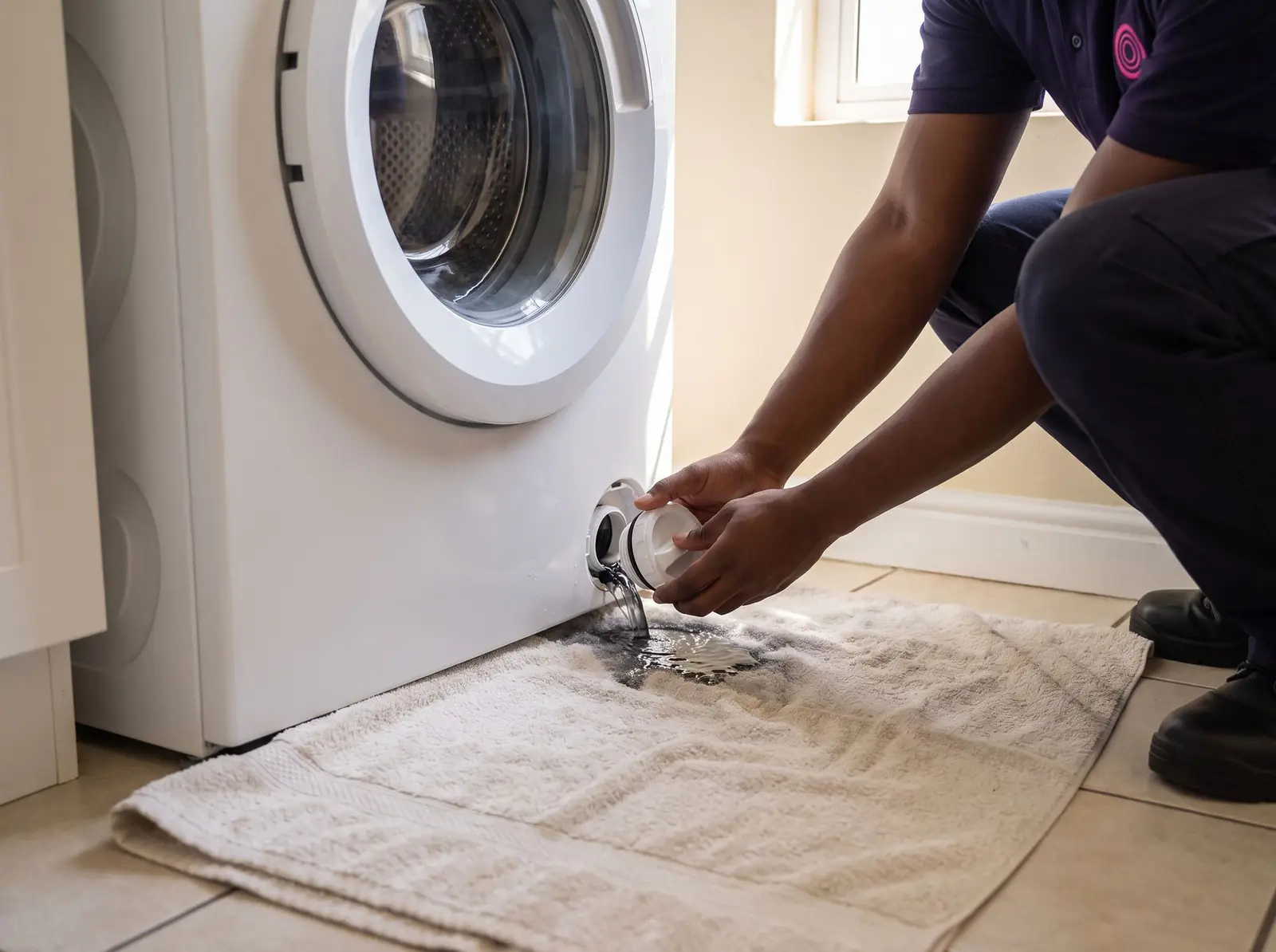
Blocked pump filter
Dog hair, fluff, coins and the odd sock collect in the filter at the bottom front. The machine drains slowly, then stops draining at all.
White residue on dark clothes
Undissolved powder from overdosing, a cold wash or a blocked drawer that doesn't flush properly. Use less detergent, try liquid on cold washes and clean the drawer.
Error code mid-cycle
Drain, fill, heat or door faults show up as codes on most newer machines. Photograph the code before switching off and send it with your booking.
Shaking and walking
A heavy, unbalanced load on a machine that isn't level makes it rock and creep across the floor. Level the feet and lock them, and spread the load. If it still bangs, the shock absorbers may be worn.
Big wash days without the breakdowns
A machine's capacity is the weight of dry washing it takes, and wet washing is several times heavier. A drum filled to the brim with dry towels is far more than the machine is happy to spin. Aim for a full drum with room for your hand on top.
Split the big jobs. Wash bedding on its own day, with a towel or two to balance the drum, and don't put a duvet in a machine that's too small for it. Every heavy load you split takes strain off the bearings, the belt, the shock absorbers and the motor.
Detergent: less is more
Too much detergent doesn't clean better. It leaves residue in the clothes and the machine, feeds the smell in the door seal, overflows the drawer and blocks the filter. Use the amount the pack recommends for your load and the hardness of your water, and use a low-suds detergent in a front loader.
Fabric softener is the other culprit. It coats the inside of the drum and the hoses. If you use it, use less, and run a hot wash with an empty drum once a month.
Pets and the pump
Dog and cat hair is hard on a washing machine. It collects in the pump filter, wraps around the pump's impeller and clogs the drain hose. Shake pet bedding outside before it goes in, wash it on its own, and clean the pump filter afterwards. If the machine starts draining slowly after a pet wash, that's the first place to look.
After you book
Once you've booked, we confirm the visit with you. Typically at your door within 60 minutes for same-day bookings. Track your technician live: when they leave, you get a live tracking link on your phone.
The technician runs the machine, listens to the drum, checks the drain and the drive, and explains the fault and the price before any work starts.

No call-out fee when we repair it.If no repair is done, a R500 call-out applies. The technician finds the fault and explains the repair before any work starts, so you decide whether to go ahead.
Book a repairWashing machine repairs in Benoni: your questions
Can overloading damage a washing machine?
Yes. Regular overloads wear the drum bearings, the belt, the shock absorbers and the motor faster. A full drum with room for your hand on top is about right.
Why is foam coming out of my washing machine?
Usually too much detergent, or a high-suds powder in a front loader. Run a rinse with no detergent, then use less, or switch to a low-suds front-loader detergent.
Is it worth replacing the bearings on my washing machine?
On a younger machine, usually. On an older one, especially if the bearings sit inside a sealed tub, compare the price with a new machine first. The technician gives you the price before any work starts.
My washing machine died after a power cut. Can it be fixed?
Often. A surge when the power returns can blow a fuse on the control board or damage the board itself. Check the plug point and the breaker first, then book. During load shedding, switch the machine off at the wall to protect it.
How much washing powder should I use?
The amount on the pack for your load size and how dirty it is, which is usually less than you think. In a front loader, use a low-suds detergent. Too much leaves residue, smells and foam.
What does a washing machine repair cost in Benoni?
A belt, a cleared filter or a pump is a modest repair. Bearings worn by years of heavy loads cost the most. The technician tells you which it is, and the price, before any work starts.