
Repair guide · Washing machine repairs
Washing machine not draining? How to fix it safely
A drum full of water looks like a disaster, but a machine that won't drain is often just blocked. Here's how to empty it safely and find the blockage yourself.
Every wash ends with the drain pump pushing the water out through the drain hose into your standpipe or sink waste. Between the drum and the pump sits a filter that catches coins, hair clips, buttons and fluff. When the filter clogs, the hose kinks or the pump fails, the water stays in the drum, and most machines then refuse to spin or open the door.
Front loaders and top loaders both have drain pumps, but only front loaders usually have a filter you can reach. The checks below are written mainly for front loaders, with notes for top loaders where they differ.
Safety first. Switch the machine off at the wall and unplug it before you open the filter hatch. If you've just run a hot wash, wait for the water to cool. Keep water away from plug points, and don't tip the machine over to drain it.
Checks you can do at home
Try a drain or spin cycle
Before you open anything, select the drain or spin-only programme and listen. If you hear the pump humming but no water moving, there's a blockage. If you hear nothing at all, the pump or its control may have failed.
Check the drain hose
Pull the machine out a little and follow the grey hose from the back to the drain. Look for kinks where it's been pushed against the wall, and make sure the end isn't pushed too far down the standpipe. If it connects under the sink, check that the sink waste isn't blocked too.
Get ready to drain
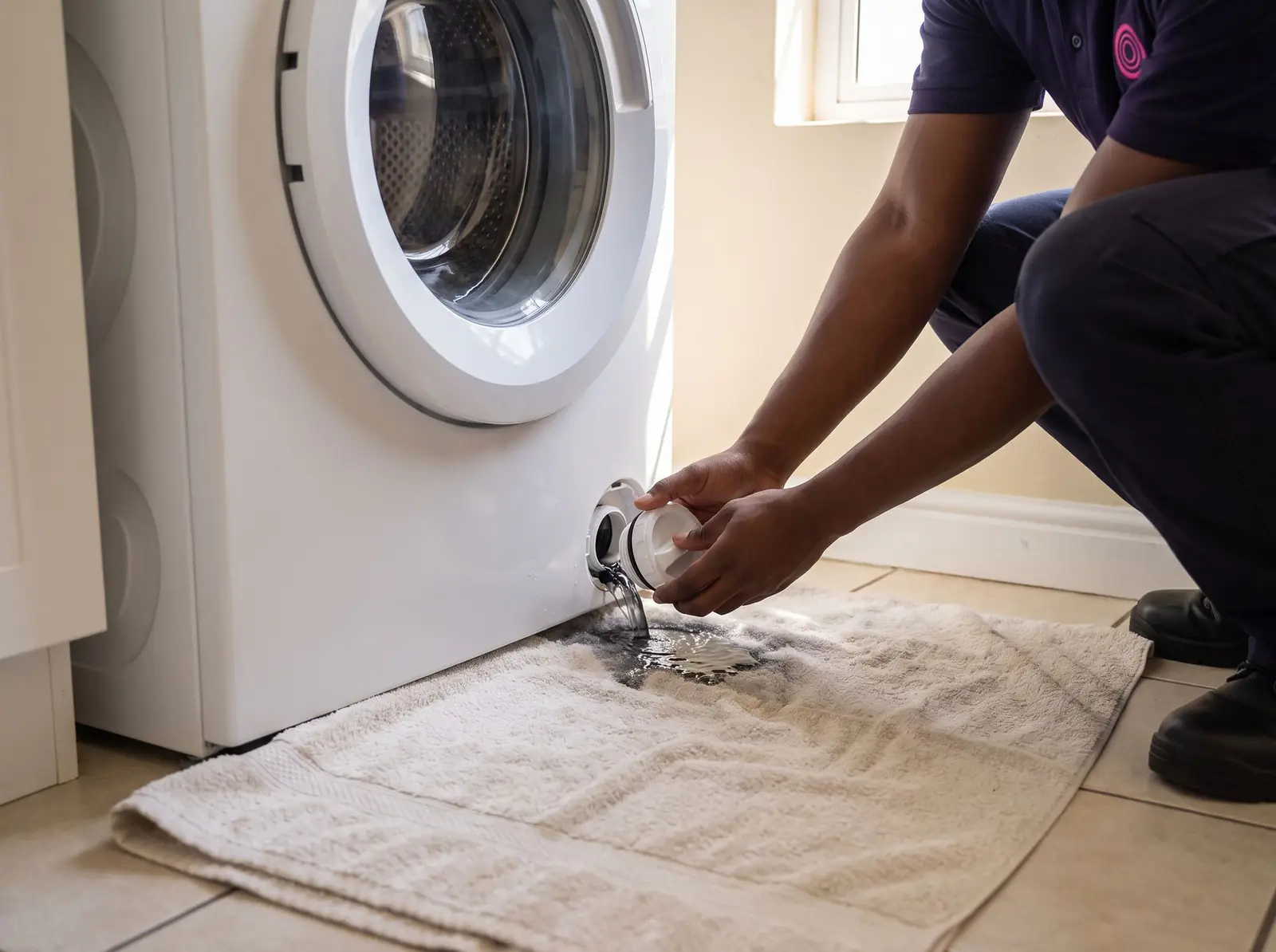
Most front loaders have a small hatch at the bottom front. Lay down old towels and find the shallowest tray or baking dish you have, because the gap under the hatch is low. Expect more water than you think.
Drain through the emergency hose
Many machines have a thin hose with a cap next to the filter. Pull it out, hold it over the tray and remove the cap. Let the water run out, capping it again whenever the tray is full. If there's no emergency hose, unscrew the filter a quarter turn at a time and let the water seep out slowly.
Clean the pump filter
Once the water is out, unscrew the filter fully and pull it out. Clear the fluff and any objects, rinse it under the tap and look into the opening with a torch for anything else stuck there. Screw the filter back firmly, or it will leak on the next wash.
Run a rinse and drain
Run a short rinse or drain cycle with the machine empty and watch the drain. If the water goes out smoothly, you've found the problem. If it still won't drain, the pump has probably failed.
Top loaders
Most top loaders don't have a filter you can reach. Check the drain hose and the standpipe, then bail the water out of the drum with a jug and a bucket. If the machine still won't drain when it's empty, the pump or a blockage inside it needs a technician.
Signs the drain pump has failed
After cleaning the filter, these point to the pump itself:
- A loud hum or buzz during the drain, but no water moving.
- No sound at all from the pump when it should be draining.
- A grinding or rattling noise from the bottom of the machine.
- Water draining very slowly even with a clean filter and a straight hose.
When to call a technician
If the filter and hose are clear and the machine still won't drain, the pump, its wiring or the control board needs testing. The same goes for a top loader that won't drain when it's empty, or a machine that shows a drain error code straight after you've cleaned the filter.
Tell us the make and model and any error code when you book. Drain pumps are a standard repair, and you'll know the cost before any work starts. More on washing machine repairs.

No call-out fee when we repair it.If no repair is done, a R500 call-out applies. The technician finds the fault and explains the repair before any work starts, so you decide whether to go ahead.
Book a repairQuestions people ask
How do I force my washing machine to drain?
Select the drain or spin-only programme first. If that doesn't work, switch off at the wall, open the hatch at the bottom front, and drain the water through the emergency hose or by slowly loosening the pump filter over a tray.
How do I clean a washing machine pump filter?
Switch off at the wall, put a towel and a shallow tray in front of the hatch at the bottom front, and drain the water through the small emergency hose if there is one. Then unscrew the filter slowly, pull out the fluff, coins and hair clips, rinse it under the tap and screw it back in firmly so it doesn't leak.
How do I get rid of standing water in my washing machine?
On a front loader, drain it through the emergency hose or the pump filter at the bottom front. On a top loader, bail it out with a jug. Then clean the filter and check the hose before you run it again.
Is it safe to open the pump filter with water in the machine?
Yes, if you go slowly and the water has cooled. Switch the machine off at the wall first and expect a lot of water: a full drum won't fit in one tray. Loosen the filter a little, let the tray fill, tighten it, empty the tray and repeat.