
Repair guide · Fridge repairs
Fridge not cooling? What to check first
A fridge that runs but won't get cold isn't always a big repair. These checks are safe, take about twenty minutes, and sort out more problems than you might expect.
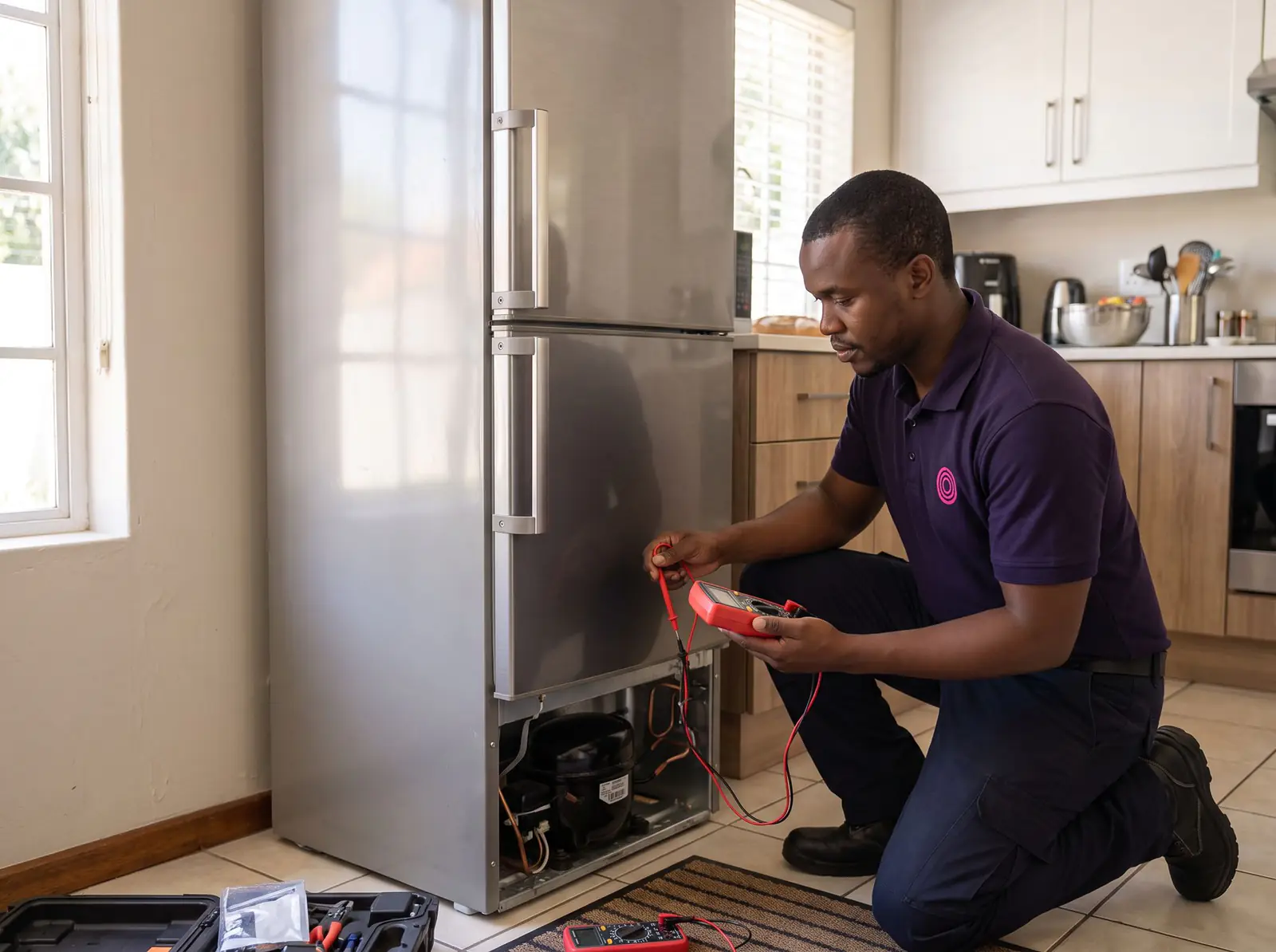
First, look after the food. Move milk, meat and medicines to a cooler box with ice, or to a neighbour's fridge, and keep the fridge door closed as much as you can while you work through this list. If a lot of food goes to waste, check your household contents policy: some cover food that spoils when a fridge breaks down, and OneCompare compares that cover alongside car insurance.
It helps to know how a fridge keeps cold. A compressor, usually at the bottom at the back, pumps refrigerant through a cooling plate inside the fridge (the evaporator) and a grid of pipes on the outside (the condenser). The evaporator takes heat out of the cabinet and the condenser gets rid of it into the room. In most fridge-freezers, a fan pushes cold air from the freezer into the fridge through a vent, and in frost-free models a heater melts the ice off the evaporator every so often. When any part of that chain stops working, the fridge warms up.
Safety first. Switch the fridge off at the wall before you clean the coils, clear a drain or move it. Don't open panels inside the fridge or at the back, and never chip at ice with a knife or a screwdriver: a punctured cooling pipe means a gas leak and a much bigger repair.
Checks you can do at home
Check the power and the settings
Is the light on, and can you hear the fridge running? Check that the temperature dial hasn't been knocked to its warmest setting. Some digital fridges have a display or demo mode that keeps the lights on but switches the cooling off. The manual explains how to turn it off.
Give it room to breathe
A fridge has to get rid of heat. Leave a gap of a few centimetres at the back and sides, keep it away from the oven and direct sun, and don't stack things on top of a model that vents there. A fridge in a hot garage in summer may never catch up.
Clean the condenser coils
With the fridge switched off, find the coils at the back or behind the kick plate at the bottom. Vacuum them gently with a brush attachment. A blanket of dust and pet hair makes the compressor run hot and long.
Test the door seal
Close the door on a sheet of paper and pull it out. If it slides out easily, the seal isn't gripping at that spot. Try a few places all the way round. Clean the seal with warm soapy water, because sticky spills stop it from sealing. A torn or flattened seal needs replacing.
Clear the vents inside
Cold air comes into the fridge through vents, usually high on the back wall. If shelves are packed tight against them, the fridge section warms up even though the freezer is fine. Move things around so air can circulate.
Look for ice on the back wall
In a frost-free fridge or freezer, a thick sheet of ice on the back panel points to a defrost fault. Switching the fridge off with the doors open for a day, with towels down, melts it and may get the cooling going for a while. If the ice comes back, a part needs replacing.
Listen to it
A steady hum from the compressor is normal. A click every few minutes, followed by silence, often means the compressor is trying to start and failing, which is usually the start relay or the compressor itself. A silent fan inside the freezer is another clue worth noting.
Why fridges stop cooling
When the checks above don't fix it, the fault is usually one of these:
- A defrost fault: the heater, timer, board or sensor fails and ice smothers the evaporator.
- A fan that has stopped: cold air stays in the freezer and never reaches the fridge.
- A thermostat or temperature sensor: the fridge thinks it's colder than it is and stops cooling too soon.
- The start relay or capacitor: the compressor can't start, so you hear clicking instead of a hum.
- The compressor or a gas leak: the bigger repairs, where the technician will help you weigh up the cost against a new fridge.
Fridge too cold or freezing the food
The opposite problem has the same roots. If the milk and lettuce at the back are freezing, start with the dial: on many mechanical thermostats a higher number means colder, not warmer, so a fridge set to the top of the dial runs almost all the time. Turn it back to the middle and give it a day to settle.
Then look at where the food sits. Cold air usually comes into the fridge through a vent at the back or the top, and anything pushed up against it freezes. Leave a gap in front of the vent. If the fridge still freezes everything with the dial turned down, the thermostat, a temperature sensor or the air damper between the freezer and the fridge has stuck, and that's a repair.
When to call a technician
If the fridge is still warm a few hours after you've worked through these checks, if you hear repeated clicking, if the ice comes back after a defrost, or if you notice a burning smell, it's time to book. Leave the fridge switched off if anything smells hot.
When you get in touch, tell us the make and model (there's a sticker on the inside wall), what you've already checked, and whether the freezer is still working. It helps the technician arrive knowing where to start. You can also see our fridge repairs page.

No call-out fee when we repair it.If no repair is done, a R500 call-out applies. The technician finds the fault and explains the repair before any work starts, so you decide whether to go ahead.
Book a repairQuestions people ask
Why is my refrigerator not cooling but my freezer is too cold?
In most fridge-freezers the fridge gets its cold air from the freezer. If the vent between them is blocked by ice or food, or the fan or damper has failed, the freezer gets colder while the fridge warms up.
How do I reset my refrigerator compressor?
Most fridges don't have a reset button. Switching off at the wall for ten minutes, then on again, lets the compressor's overload protection reset. If the compressor clicks and stops again, the start relay or the compressor needs a technician.
How long does a fridge take to get cold after switching on?
A few hours to feel cold, and up to a day to reach its normal temperature when full. Don't load it with warm food straight away.
Why is my fridge freezing my food?
Usually the thermostat is set too cold, or food is pushed against the cold-air vent at the back. Turn the dial towards the middle, leave a gap in front of the vent and give it a day. If it still freezes everything, the thermostat, a sensor or the air damper has stuck, and a technician can replace it.